Thumbnail Constraints: Limited Palette, Limited Shapes
The value of constraint
Limits focus attention. A constrained thumbnail forces choices about the essentials: which shapes to include, where to place a focal point, and how to use value and color economically. Constraints remove indecision by narrowing options, making the quality of a decision more visible.
Two constraint models
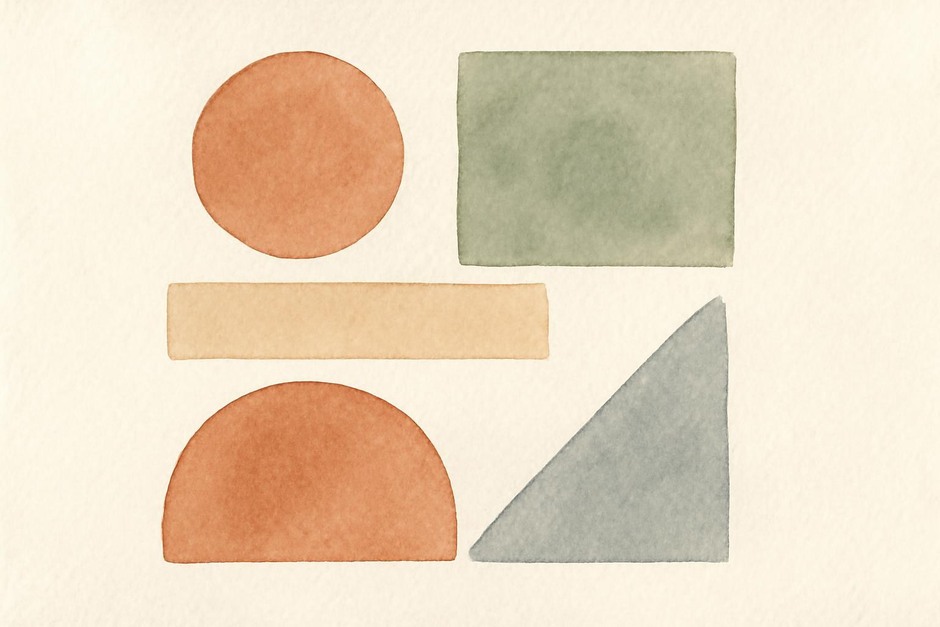
- Limited palette: Use two or three colors or values. This clarifies contrast relationships and teaches economical color use.
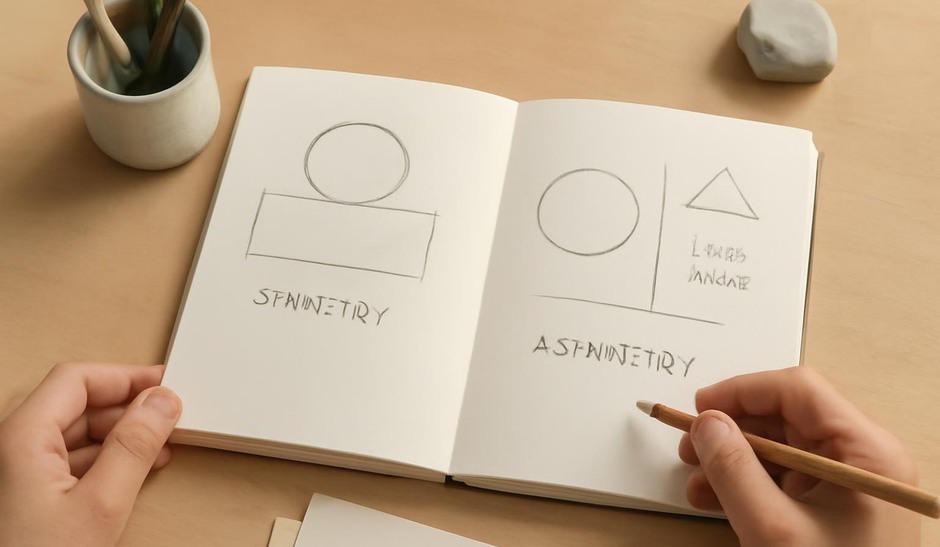
- Limited shapes: Restrict yourself to a set of shapes (for example, circles and rectangles only) to emphasize arrangement and rhythm.
Exercise A: two-value thumbnails
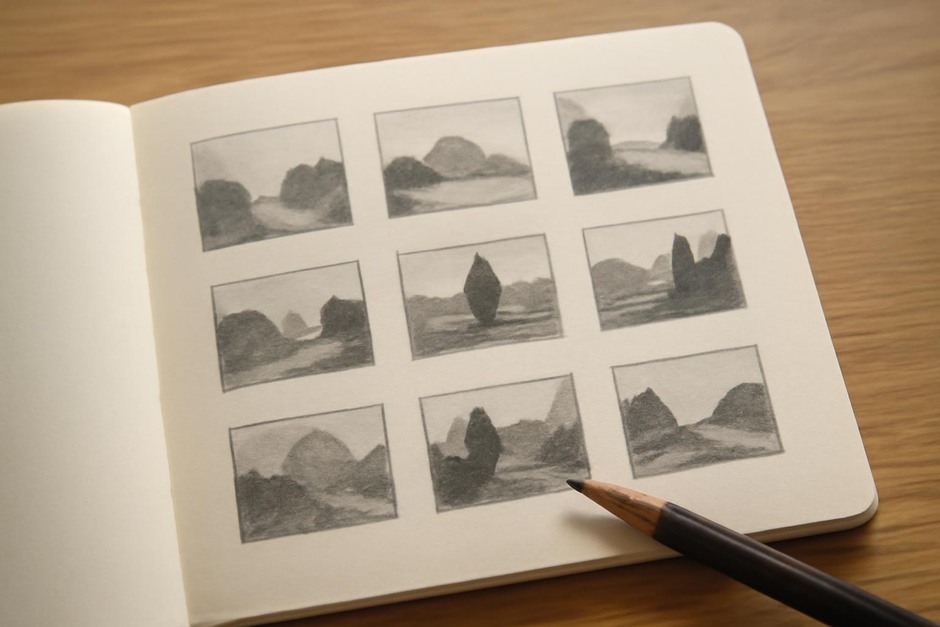
1. Select black ink and a light gray wash or two pen tones. 2. Make a page of rectangles and fill each with a two-value composition. 3. Focus on where dark meets light and where the focal value sits in the frame. 4. Aim for ten quick thumbnails in twenty minutes.
Exercise B: three-shape limit
1. Choose three shapes—circle, triangle, rectangle—and commit to using only those shapes in each thumbnail. 2. Create nine thumbnails exploring different scale, overlap, and spacing combinations. 3. Note which arrangements feel balanced and which feel constrained or awkward.
Combining constraints
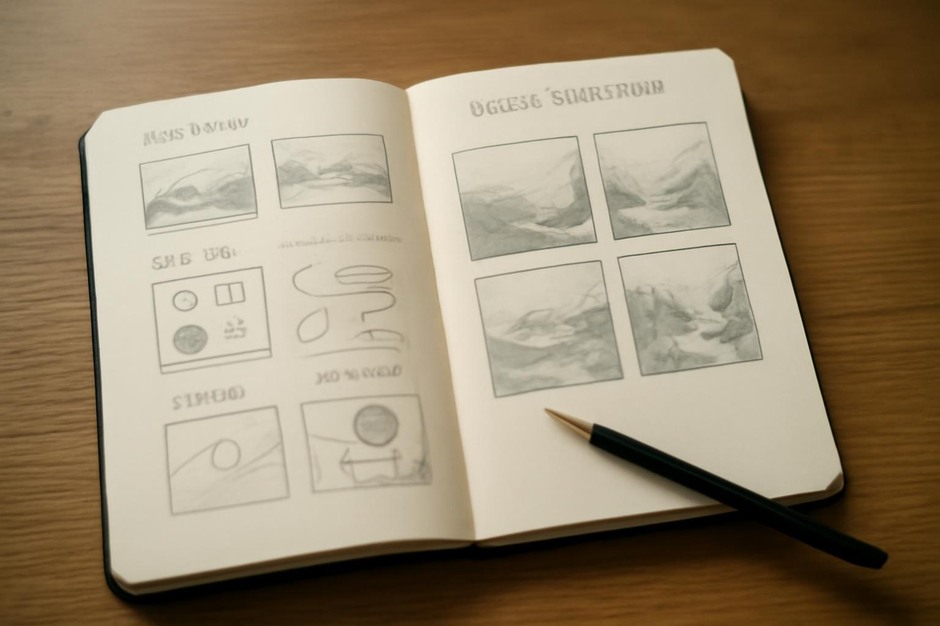
Try mixing both models: a three-shape rule with a two-value palette. This combination intensifies decision-making, revealing how shape, value, and negative space cooperate. The result is often surprising clarity because unnecessary detail is eliminated.
Reflection and iteration
After a session, mark two winners and indicate why they succeeded. Try to reproduce each winner with a small deliberate change—shift the focal shape slightly, invert the values, or change spacing. These iterations are a fast way to explore nearby compositional solutions.
Practical routine
Include one constrained thumbnail session per week. Over time the restrictions will train you to make stronger initial choices, so when you later remove constraints you bring more decisive compositional instincts to your work.
Final note
Constraint is not a limitation to creativity; it is a training tool. Compact thumbnails made under restrictions reveal core compositional principles and teach economy of choice. Return to these exercises often, and you’ll notice clearer decisions in all your work.