Balance in Practice: Asymmetry, Symmetry, and Visual Weight
Defining balance
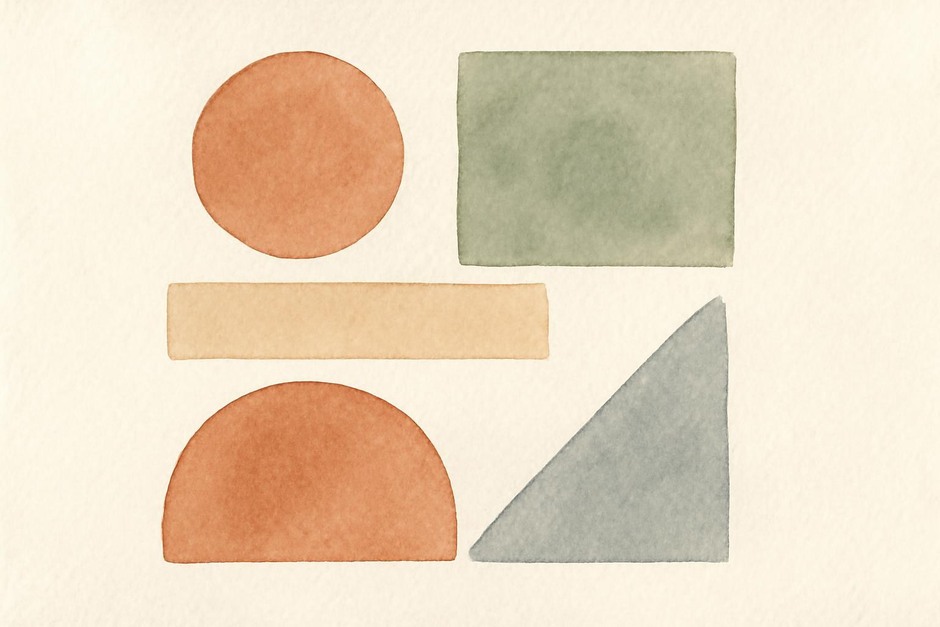
Balance is the felt equilibrium in an image. It is not always physical symmetry; often it is a managed distribution of visual weight that leaves the viewer feeling neither tugged nor confused. Learning to see and adjust visual weight is a practical skill that improves composition consistently.
Key ideas
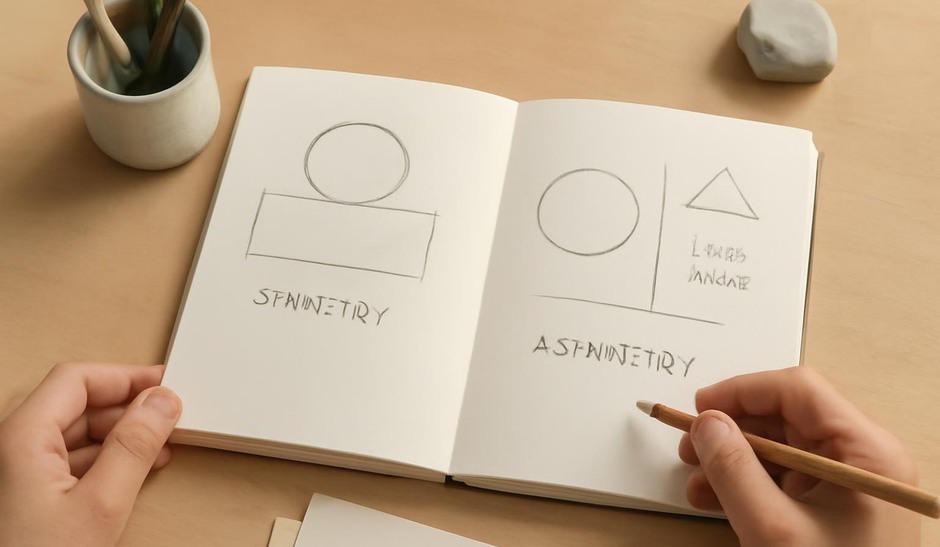
- Symmetry: Mirrored elements create formal stability and calm.
- Asymmetry: Unequal elements arranged thoughtfully can create dynamic balance.
- Visual weight: Influenced by size, value, texture, and color intensity.
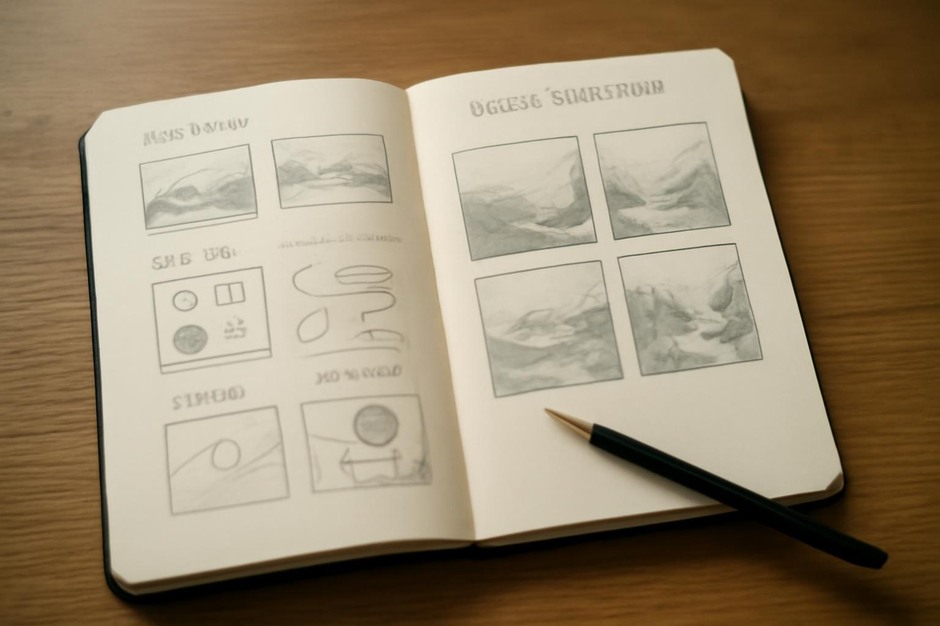
Exercise: balance triplets
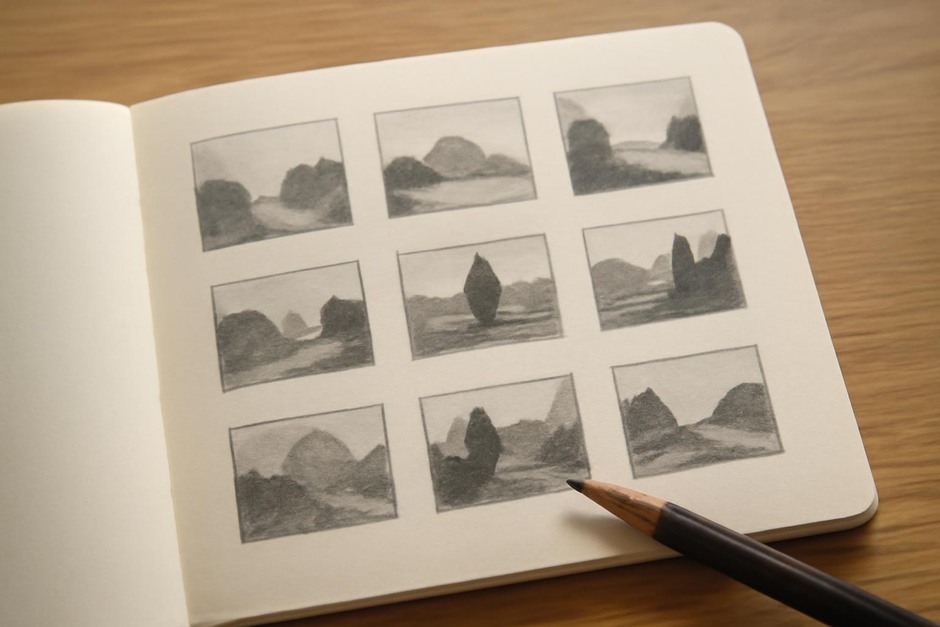
1. Draw three small thumbnails of the same scene: one symmetrical, one asymmetrical with similar visual weight, and one intentionally unbalanced. 2. Use only black and white values to focus on weight rather than detail. 3. Compare the three and note what adjustments make the asymmetrical version feel stable.
Practical adjustments to visual weight
- Increase or decrease size to shift weight.
- Darken or lighten areas to attract or release attention.
- Introduce texture or pattern to add apparent mass without increasing size.
- Use implied direction (lines leading toward an element) to enhance its weight.
Guided exercise: balancing an odd number of forms
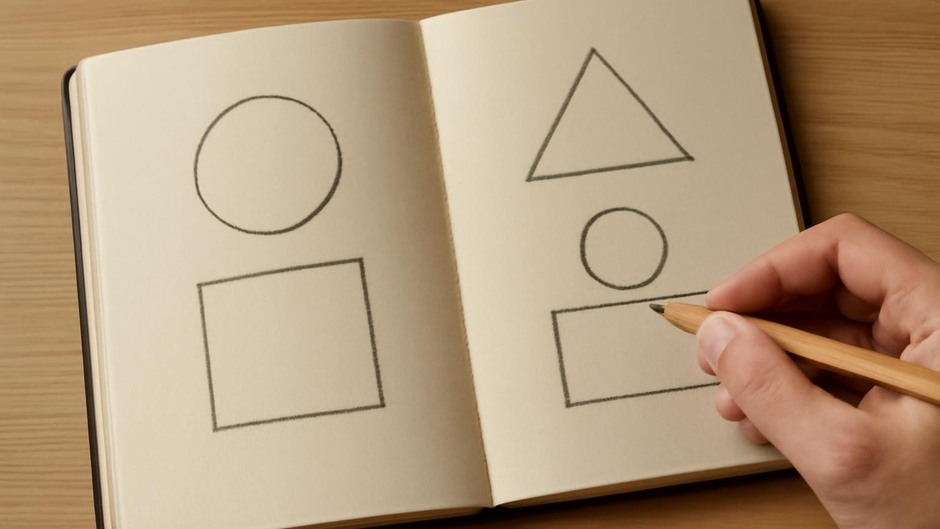
Odd groupings often feel lively but can be challenging to balance. Choose three disparate shapes and arrange them so the eye rests comfortably within the frame. Try these strategies: place the largest shape off-center and counterbalance it with two smaller shapes spaced apart; create a diagonal visual line linking the shapes; add a small dark accent opposite the largest form to hold the edge.
Routine tip
Make balance checks a deliberate step in longer works. After an initial sketch, do a quick three-value thumbnail to test overall balance before committing to detail or color. Small changes at this stage—moving an element a little left, darkening a background patch—can resolve major compositional tensions with minimal effort.
Learning outcome
Studying balance in controlled mini-exercises trains your eye to read and correct visual weight rapidly. With repeated practice you’ll develop a sense for subtle balances, enabling confident decisions in larger pieces and faster problem-solving when designs feel off-kilter.